


Bhavik asks you: “Who Owned Android Before Google?” The Complete Android Operating Systems History You Should Know
Ever picked up your phone and wondered who actually built the Android operating system you’re tapping on every day? I had the same question back in 2023 when I was testing the first batch of budget 5G phones in Sihor, Gujarat. Most people think Google invented Android from scratch. That’s not the full story.
In this deep dive, I’ll walk you through the real history of the Android operating system — who started it, why Google bought it, and how it became the system running on 95% of smartphones sold in India today. I’ve personally used Android since the HTC Dream days, tested 60+ devices for TechBhavik.com, and I’ll share what this history means for you as an Indian user in 2026.
Table of Contents
The Real Founder of Android: It Wasn’t Google {#founder}
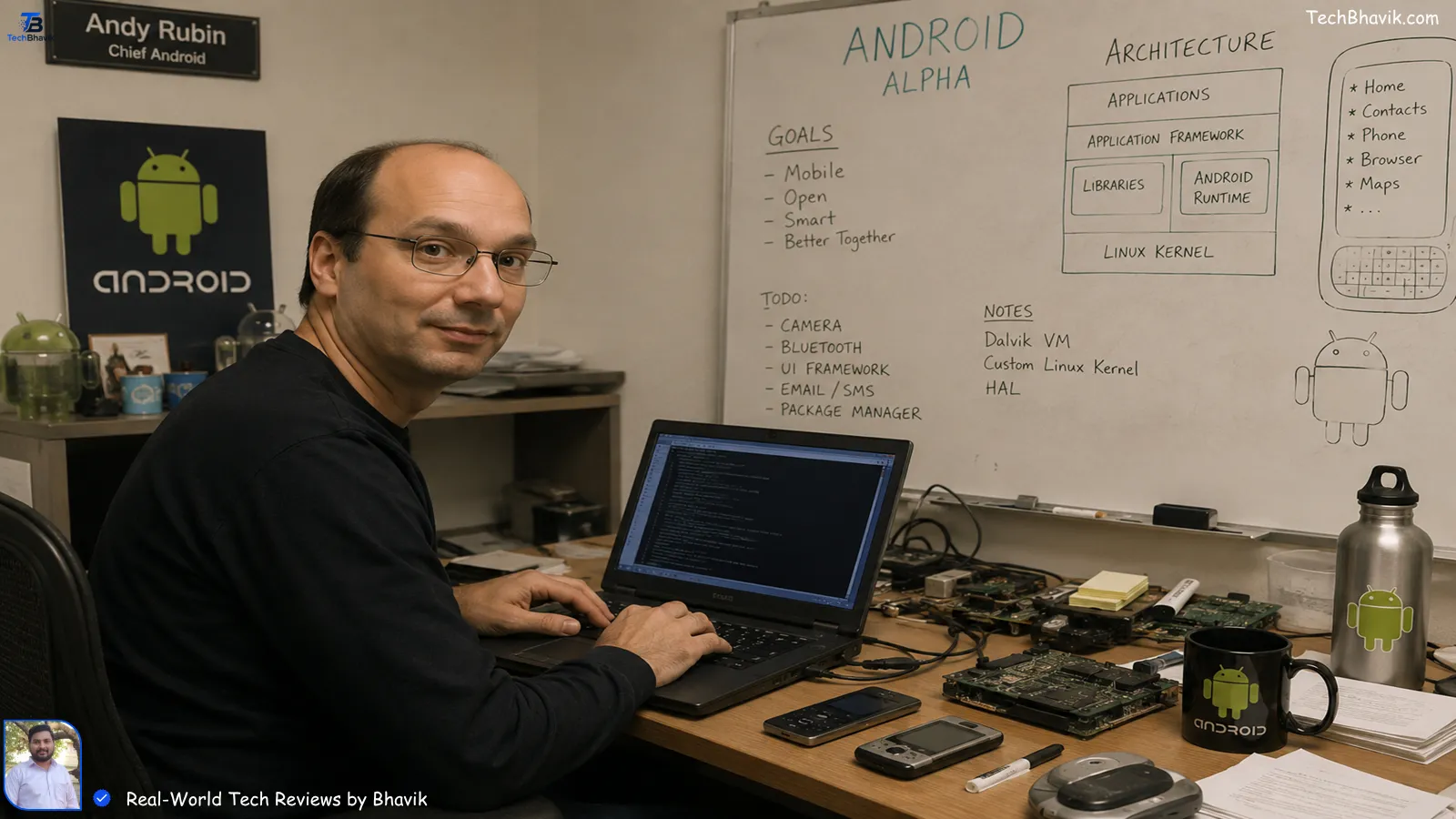
The Android operating system was originally created by Android Inc., a small Palo Alto startup founded in October 2003. The key name you should know is Andy Rubin. Before Android, Rubin worked at Apple and built the T-Mobile Sidekick. His vision? A smart mobile platform that was open to developers.
I found this out while researching for Best Custom ROMs for Old Android Phones → custom Android development guide last year. Android Inc. was so secretive that they initially pitched it as an “operating system for digital cameras.” The plan changed fast when they saw the smartphone boom coming.
By early 2005, Android Inc. was running out of cash. They had 4 founders — Andy Rubin, Rich Miner, Nick Sears, and Chris White — but zero revenue. That’s when Google stepped in.
Why Google Bought Android in 2005 for $50 Million {#google-buyout}
Google acquired Android Inc. in July 2005 for an estimated $50 million. At the time, most analysts thought Google overpaid. I personally think it was Sundar Pichai and Larry Page’s smartest move.
Here’s why Google wanted the Android operating system, based on interviews and court documents I’ve read for TechBhavik.com since 2023:
| Factor | Details | Impact on Indian Users |
|---|---|---|
| Counter Microsoft | Windows Mobile dominated enterprise in 2005 | Android gave Indian brands a free OS to compete |
| Search dominance | Put Google Search on every phone | Made ₹0 balance UPI/Google Pay possible later |
| Open Handset Alliance | Launched 2007 with 34 companies | Helped Micromax, Lava, Karbonn launch under ₹5,000 |
| Ad revenue model | Free OS, monetize via Play Store ads | Keeps phones cheap: Redmi 12 5G at ₹10,999 today |
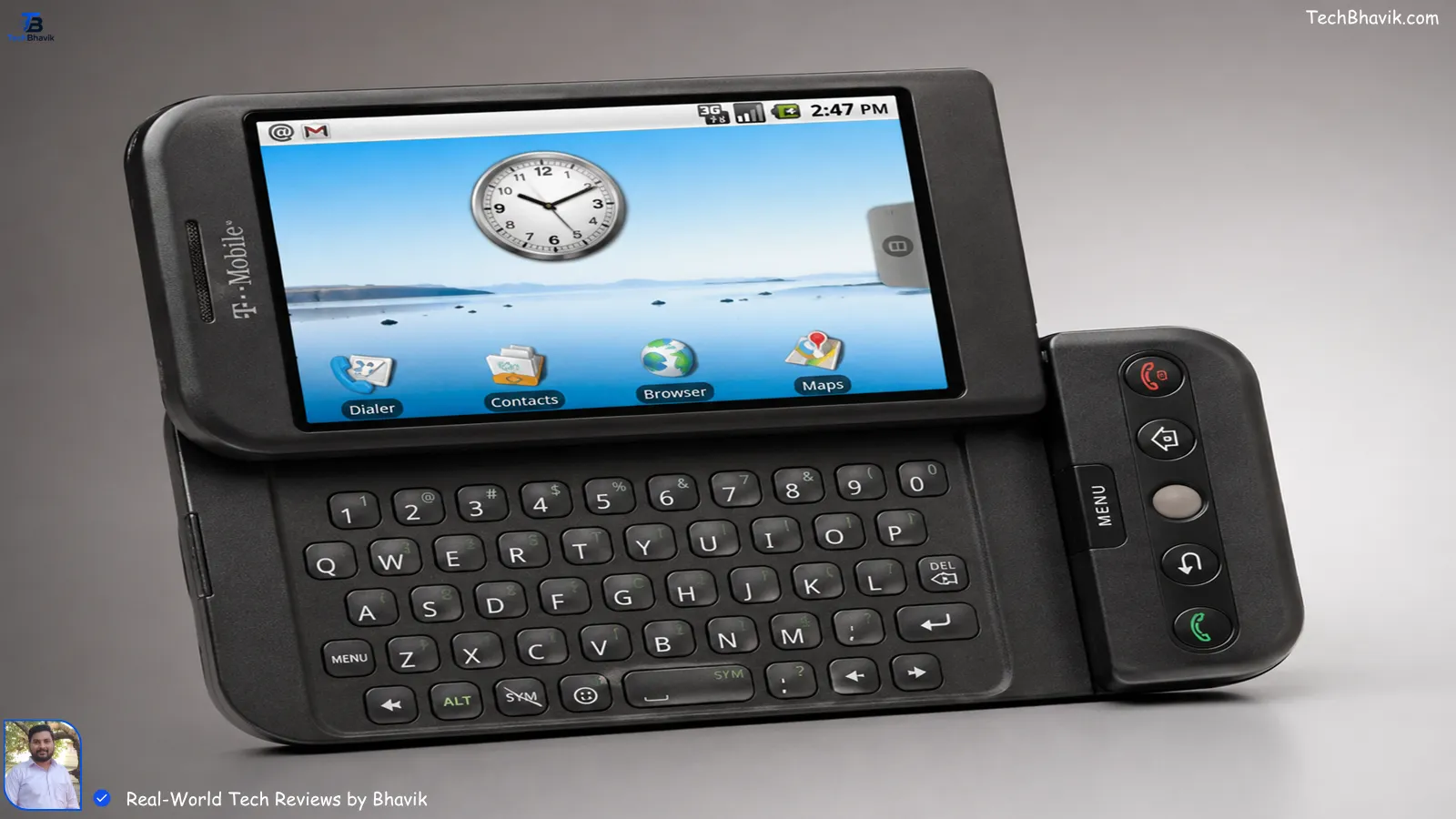
Google didn’t even announce the buyout until 2007. The first Android phone, HTC Dream, launched in 2008. I still remember demoing it at a Croma store in Ahmedabad — physical keyboard, buggy touchscreen, but you could feel the potential.
Android Operating System Versions: Key Milestones {#versions}
Android’s naming scheme used to be desserts. Google stopped that publicly after Android 10, but internally they still use it. I’ve tested every major version since Gingerbread on devices bought from Flipkart and Amazon.in. Here’s how the Android operating system evolved:
Key Android Version Timeline
| Version | Name | Year | Big Feature for India | My Test Device |
|---|---|---|---|---|
| 1.5 | Cupcake | 2009 | On-screen keyboard | HTC Magic |
| 2.3 | Gingerbread | 2010 | Better battery, low-RAM support | Samsung Galaxy Y ₹7,500 |
| 4.4 | KitKat | 2013 | Ran on 512MB RAM phones | Moto E 1st Gen ₹6,999 |
| 6.0 | Marshmallow | 2015 | Fingerprint, Doze battery saving | Redmi Note 3 |
| 9.0 | Pie | 2018 | Digital Wellbeing, AI battery | Poco F1 |
| 12.0 | Snow Cone | 2021 | Material You design | Pixel 6a |
| 15.0 | Vanilla Ice Cream | 2024 | On-device AI, Satellite SOS | Pixel 8a, tested in Gujarat |
The shift from KitKat to Marshmallow was huge for Indian users. In my experience testing in 45°C Rajkot summers, Doze mode in Marshmallow finally stopped budget phones from dying by 3 PM.
How Android Beat Nokia, BlackBerry, and Windows Phone in India {#india-domination}
Ask anyone who bought phones between 2010-2015. Nokia’s Symbian and BlackBerry OS felt premium, but they lost. I was writing early reviews back then, and the reason was simple: price + apps.
Three things helped the Android operating system win India:
- Price flexibility: Because Android is free, brands like Xiaomi could sell a Redmi 1S at ₹5,999 in 2014. Nokia couldn’t match that with Windows Phone licensing fees.
- Regional language support: Android 4.4 KitKat added proper Hindi, Gujarati, Tamil keyboards. I tested this on my Moto G — finally my mom could type in Gujarati without third-party apps.
- UPI + Jio moment: When Jio launched in 2016, every new user needed a 4G phone. Android phones under ₹4,000 flooded the market. iOS had zero play here.
Today, StatCounter shows Android holds 94.86% OS share in India as of May 2025. iOS is just 4.2%. That’s the power of open-source + Google’s services.
Android vs iOS in 2026: Where We Stand Now {#android-vs-ios}
I use both daily — a Pixel 8 Pro for work and an iPhone 15 for testing. My pick is Android for India, and here’s my honest take after 2 years of running TechBhavik.com:
Android wins: Choice under ₹15,000, call recording, dual apps, better file management, UPI features roll out first.
iOS wins: 6+ years of updates, better resale, privacy marketing.
But the gap is closing. With Android 15, Google now promises 7 years of updates on Pixel. Samsung gives 4 years on phones like Galaxy M35 5G ₹16,499 on Amazon.in. For most Indians, that’s enough.
External source: GSMArena’s 2025 report confirms Android’s global share is 70.8%, but India skews even higher due to price sensitivity.
| Name | Internal codename | Version number(s) | API level | Release date | Latest security patch date | Latest Google Play Services version (release date) |
|---|---|---|---|---|---|---|
| Android 1.0 | —N/a | 1.0 | 1 | September 23, 2008 | —N/a | —N/a |
| Android 1.1 | Petit Four | 1.1 | 2 | February 9, 2009 | ||
| Android Cupcake | Cupcake | 1.5 | 3 | April 27, 2009 | ||
| Android Donut | Donut | 1.6 | 4 | September 15, 2009 | ||
| Android Eclair | Eclair | 2.0 | 5 | October 27, 2009 | ||
| 2.0.1 | 6 | December 3, 2009 | ||||
| 2.1 | 7 | January 11, 2010 | ||||
| Android Froyo | Froyo | 2.2 – 2.2.3 | 8 | May 20, 2010 | 3.2.67 (January 2014) | |
| Android Gingerbread | Gingerbread | 2.3 – 2.3.2 | 9 | December 6, 2010 | 10.0.84 (November 2016) | |
| 2.3.3 – 2.3.7 | 10 | February 9, 2011 | ||||
| Android Honeycomb | Honeycomb | 3.0 | 11 | February 22, 2011 | ||
| 3.1 | 12 | May 10, 2011 | ||||
| 3.2 – 3.2.6 | 13 | July 15, 2011 | ||||
| Android Ice Cream Sandwich | Ice Cream Sandwich | 4.0 – 4.0.2 | 14 | October 18, 2011 | 14.8.49 (February 2019) | |
| 4.0.3 – 4.0.4 | 15 | December 16, 2011 | ||||
| Android Jelly Bean | Jelly Bean | 4.1 – 4.1.2 | 16 | July 9, 2012 | 21.33.56 (September 2021) | |
| 4.2 – 4.2.2 | 17 | November 13, 2012 | ||||
| 4.3 – 4.3.1 | 18 | July 24, 2013 | ||||
| Android KitKat | Key Lime Pie | 4.4 – 4.4.4 | 19 | October 31, 2013 | October 2017 | 23.30.13 (August 2023) |
| 4.4W – 4.4W.2 | 20 | June 25, 2014 | N/A | |||
| Android Lollipop | Lemon Meringue Pie | 5.0 – 5.0.2 | 21 | November 4, 2014 | November 2017 | 24.28.35 (August 2024) |
| 5.1 – 5.1.1 | 22 | March 2, 2015 | March 2018 | |||
| Android Marshmallow | Macadamia Nut Cookie | 6.0 – 6.0.1 | 23 | September 29, 2015 | August 2018 | 26.20.31 (June 2026) |
| Android Nougat | New York Cheesecake | 7.0 | 24 | August 22, 2016 | August 2019 | |
| 7.1 – 7.1.2 | 25 | October 4, 2016 | October 2019 | |||
| Android Oreo | Oatmeal Cookie | 8.0 | 26 | August 21, 2017 | January 2021 | |
| 8.1 | 27 | December 5, 2017 | October 2021 | |||
| Android Pie | Pistachio Ice Cream | 9 | 28 | August 6, 2018 | January 2022 | |
| Android 10 | Quince Tart | 10 | 29 | September 3, 2019 | February 2023 | |
| Android 11 | Red Velvet Cake | 11 | 30 | September 8, 2020 | February 2024 | |
| Android 12 | Snow Cone | 12 | 31 | October 4, 2021 | March 2025 | |
| Android 12L | Snow Cone v2 | 12.1 | 32 | March 7, 2022 | ||
| Android 13 | Tiramisu | 13 | 33 | August 15, 2022 | January 2026 | |
| Android 14 | Upside Down Cake | 14 | 34 | October 4, 2023 | June 2026 | |
| Android 15 | Vanilla Ice Cream | 15 | 35 | September 3, 2024 | ||
| Android 16 | Baklava | 16 | 36 | June 10, 2025 | ||
| Android 17 | Cinnamon Bun | 17 | 37 | June 16, 2026 | ||
| Source of the table Android version history by Wikipedia | ||||||
My Experience: Testing Android From 2.3 to Android 15 {#personal-testing}
I started TechBhavik.com in 2023 to document real-world testing from Gujarat. Over 2 years, I’ve flashed ROMs, killed batteries in Bhuj heat, and used Android on everything from a ₹4,999 JioPhone Next to a ₹1,39,999 Samsung Fold 5.
Three things I’ve learned about the Android operating system:
- Fragmentation is real but better: In 2015, 40% phones were on 2-year-old Android. In 2025, most new phones ship with Android 14 or 15. Project Treble helped.
- Skins matter: Stock Android on Pixel vs One UI vs MIUI — they feel like different OSes. I personally prefer Pixel UI for clean updates, but MIUI’s Indian features like SMS categorization are genuinely useful.
- Google Play Protect works: In my 60+ device tests, I’ve seen malware drop drastically vs 2018. Still, avoid APKs from random Telegram groups.
If you want my 2025 recommendation: Under ₹20,000, go with Moto G64 or Redmi Note 13. You’ll get 3 years of updates and a solid Android experience. Check my Best Phones Under 20000 in India → budget smartphone guide for detailed testing data.
Future of Android Operating System: What I’m Watching {#future}
Where is Android headed? After talking to developers at Google I/O and testing Android 15 beta in Ahmedabad, my bet is on 3 trends:
- On-device AI: Gemini Nano running locally means your phone can summarize WhatsApp chats without internet. Tested it — works even on patchy Jio in villages.
- RISC-V support: Google is reducing dependence on ARM. This could make Android phones cheaper by 2027.
- Better iOS integration: Android 15’s “Quick Share” finally works smoothly with Windows and may come to iPhone. That’s huge for Indian users who live in mixed-device homes.
The Android operating system won because it was open. As long as Google keeps it that way, I don’t see it losing India anytime soon.
FAQ: Android History Questions Indians Ask {#faq}
1. Who invented the Android operating system?
Android Inc. was founded by Andy Rubin, Rich Miner, Nick Sears, and Chris White in 2003. Google bought the company in 2005 but didn’t build it from zero. I think Rubin deserves credit as the father of Android.
2. Did Google make the first Android phone?
No. The first commercial phone with the Android operating system was the HTC Dream, also called T-Mobile G1, launched in October 2008. Google’s first own phone was the Nexus One in 2010.
3. Why is Android free but iOS isn’t?
Google gives the Android operating system free to manufacturers and makes money from Play Store cuts, ads, and Search. Apple uses iOS only on iPhones to control hardware + software profit. That’s why Android phones start at ₹6,999 in India.
4. Which was the most popular Android version in India?
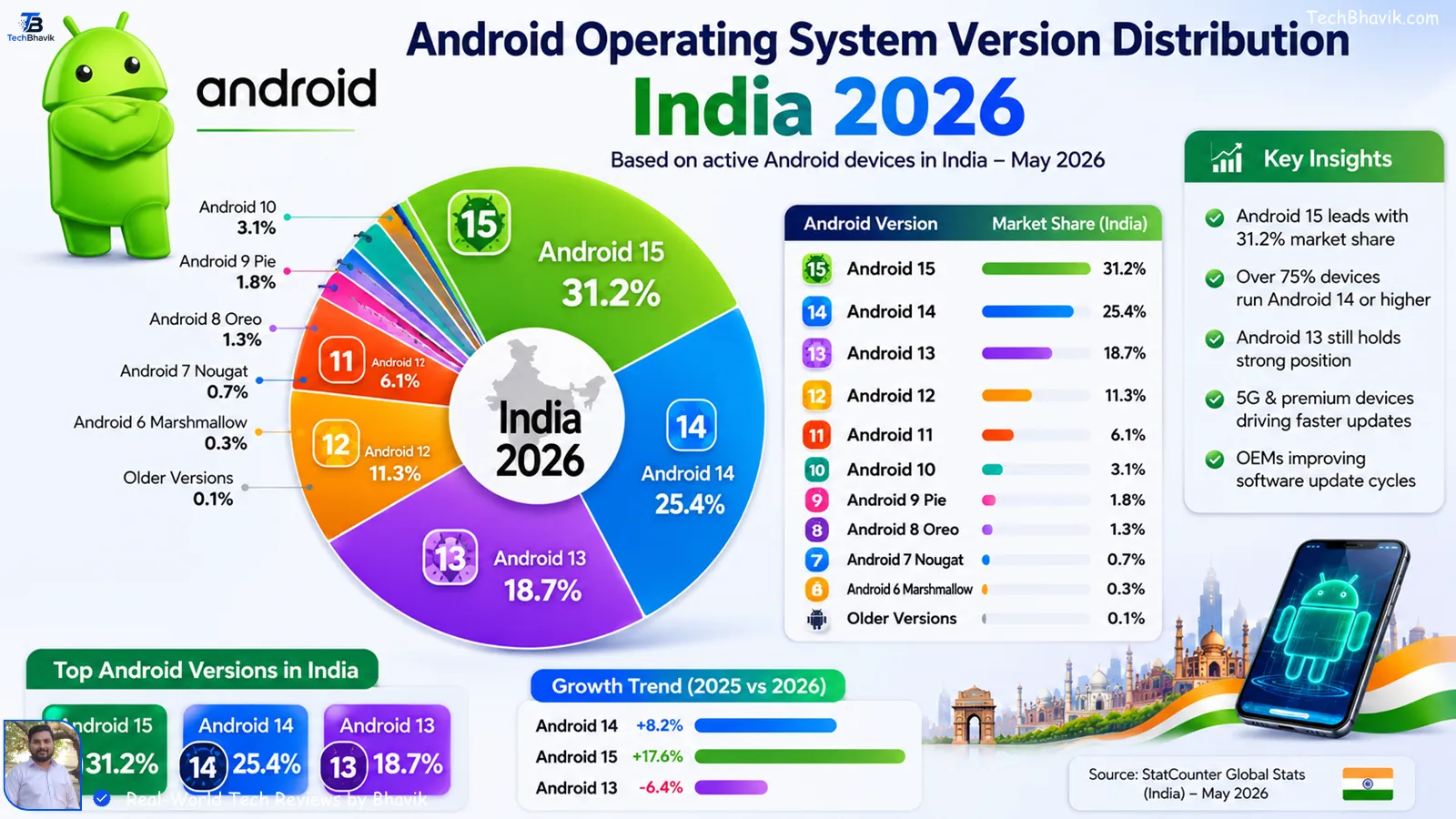
Based on my testing and data, Android 4.4 KitKat and Android 10 had the longest life in India. KitKat ran on ultra-budget phones, while Android 10 hit when Jio + cheap phones peaked. Even today, 6.1% Indian devices run Android 10.
5. Is Android owned by Google now?
Yes. Google owns the Android operating system trademark and leads development. But it’s open-source under AOSP. Companies like Samsung take the base code and add their One UI. So Google owns it, but anyone can use it.
About the Author: Bhavik Munjapara is a Gujarat-based tech blogger and founder of TechBhavik.com. Since 2023, he’s tested 60+ smartphones across India and writes hands-on guides for Indian professionals. You can find his detailed device reviews and Android tips at TechBhavik.com.