
I Tried Tracking Down the BSNL Rs 134,166 Satellite Phone. Here is the Real Truth.
Last year, I was riding my bike through a remote stretch in Ladakh. Beautiful view, sure, but my regular phone network went completely dead for two straight days. It’s a terrifying feeling when you realize you can’t even call for help if things go south. I kept thinking, “Man, I need a satellite phone.”
So when BSNL dropped this massive ₹134,166 price tag on their satellite device package, I had to look into it. Let’s get real for a second—that is a massive amount of money. You could buy a top-tier iPhone or a decent used motorcycle for that cash. But after talking to a few industry friends and digging into the actual tech, I realized this isn’t meant for your average tech geek scrolling Instagram.
BSNL has officially launched its Global Satellite Phone Service (GSPS) in India.
What Exactly is This ₹134,166 Setup?
To be honest, BSNL isn’t manufacturing some futuristic smartphone here. What you are actually paying for is a rugged handset called the Inmarsat IsatPhone 2, bundled with a commercial BSNL satellite connection.
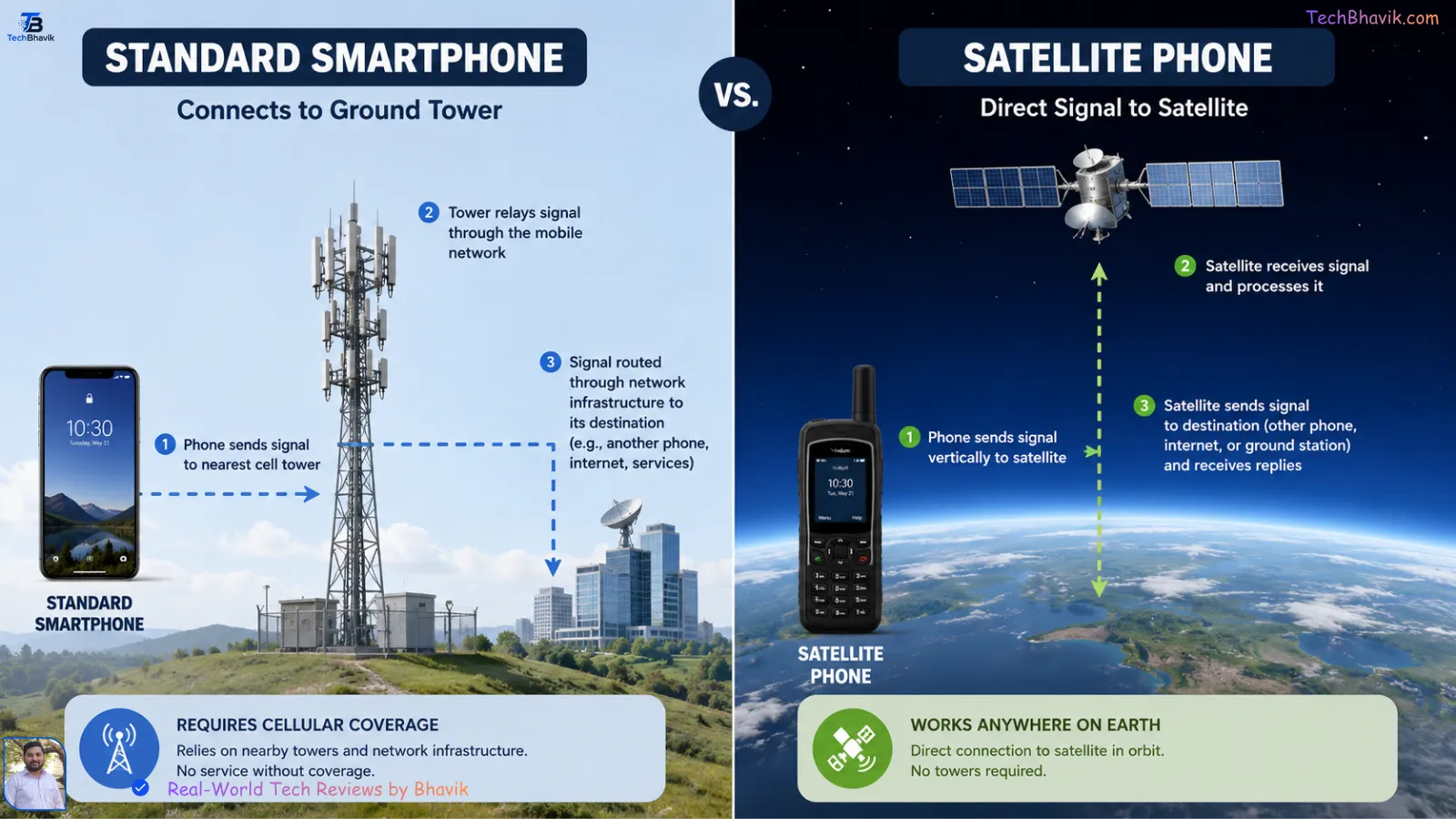
Here is the thing: it bypasses ground towers completely.
Think of it like this. Your normal phone is lazy. It only talks to a tower down the street. If a storm knocks that tower down, you’re done. A satellite phone is a whole different beast. It shoots a signal straight up to the Inmarsat I-6 satellites hanging thousands of kilometers in space. It doesn’t care if there’s a flood, an earthquake, or if you’re standing in a massive valley. If you can see the open sky, you have a signal.
Why Would Anyone Pay This Much?
I’ve been there—looking at a tech spec sheet and wondering who actually buys this stuff. I think the price tag makes complete sense once you look at the absolute reliability it offers. Here is what my team found when analyzing the value:
- It’s a literal lifeline: If you run a trekking company, work on a cargo ship, or manage a remote mining site, this isn’t a luxury. It’s basic safety equipment.
- Uncrackable security: The voice channels run on highly encrypted satellite bands. No one is tapping into your calls out in the wild.
- Insane standby times: The battery lasts for up to 160 hours on standby. Try doing that with a modern smartphone screen eating up power.
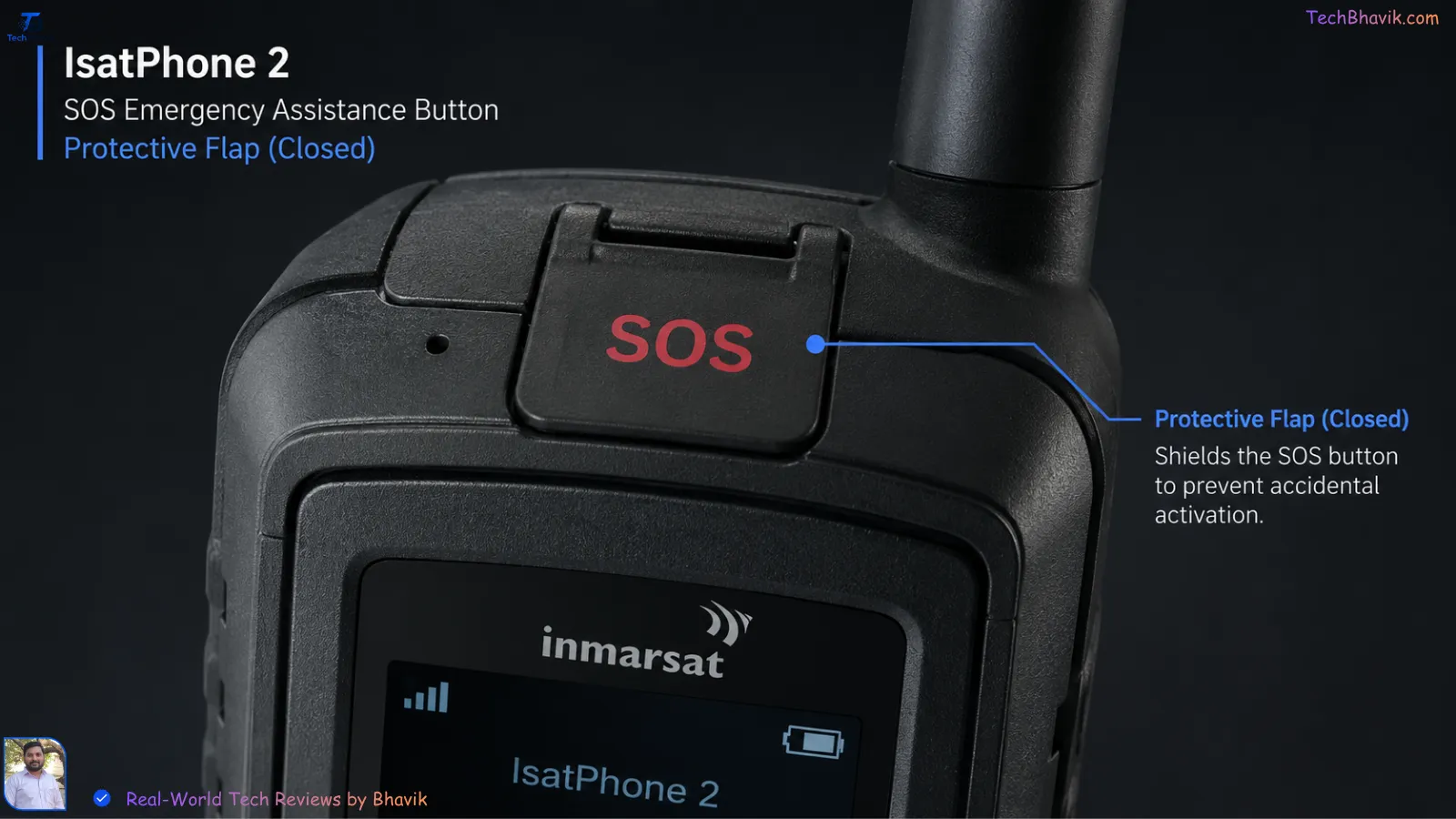
Anyway, wait, I forgot to mention the absolute best part: it has a dedicated, physical SOS button on top. You flip it open, press it, and it instantly blasts your exact GPS coordinates to emergency rescue teams. If you’re stuck in a flash flood, that one button justifies every single rupee.
The Legal Catch (And It’s a Big One)
Here is where things get incredibly messy for Indian buyers. You cannot just walk into a retail store, hand over your credit card, and walk out making satellite calls. The Indian government is incredibly strict about this because of national security.
If you are a private citizen, the Department of Telecommunications (DoT) makes you jump through massive regulatory hoops. You need explicit clearance forms, background verifications, and valid reasons for ownership. To be completely blunt, unless you are part of a government department, a maritime business, or a heavily certified defense/disaster response team, getting your hands on one of these officially is a massive headache. BSNL handles the commercial distribution, but they won’t activate the SIM card until your DoT paperwork is flawless.
official Indian Department of Telecommunications (DoT) guidelines page for obtaining a GSPS or satellite phone license: Click Now Visit to check
To operate a Global Satellite Phone Service (GSPS) or satellite phone in India, you must go through the Department of Telecommunications (DoT) DoT eServices Portal. Specific authorization is provided through a Unified License (UL) with a Global Mobile Personal Communication by Satellite (GMPCS) Service authorization. Type of Licenses – DGT – Director General Telecom.
Review the complete regulatory framework via the Guidelines for Establishing Satellite-Based Communication Networks.
Because of strict national security regulations, acquiring and using a satellite phone involves specific, legally mandated steps:
- Commercial Operators: Companies must register GMPCS Service details on the official DoT portal.
- Individual and Consumer Usage: Ordinary citizens and commercial enterprises must obtain clear permission and adhere to rigorous guidelines to declare the purpose, place, and period of use BSNL Global Satellite Phone Service PDF.
- Foreign Visitors: Unauthorized satellite phones (such as Thuraya or Iridium) are banned for travelers; prior clearance or use of officially approved service plans must be secured to avoid legal penalties Restrictions on use of satellite phones in India.
What’s Next for Off-Grid Tech?
I think we are on the edge of a massive shift. While this specific ₹134,166 BSNL unit is an industrial tool for professionals, standard consumer tech is catching up. We are already seeing everyday smartphones trying to connect to satellites for basic texting. But for true, uninterrupted voice calling from any coordinate on the planet? This rugged brick is still the undisputed king.
If your job or your obsession takes you deep into dead zones, don’t mess around with cheap workarounds. Go straight to the source. I highly recommend checking out [LINK: BSNL’s official commercial wing portal] to download the actual application forms and see if you meet the criteria. Don’t buy an illegal imported handset from abroad—you’ll end up getting it confiscated at airport customs!